Dongguan Jeek Precision Technology Co., Ltd. — founded 2013
CNC Machining for Prototypes and Production Parts
Confirm material, tolerance and finish.
Request a quote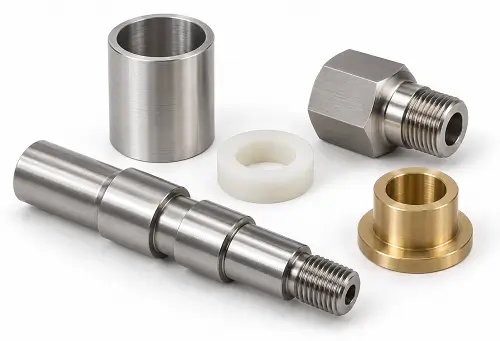
CNC machining is the core service of JeekRapid, the rapid manufacturing division of Dongguan Jeek Precision Technology Co., Ltd. The company was founded in 2013 in Dongguan, Guangdong, and works from drawings supplied by buyers who need metal and plastic parts made to order.
CNC machining at a glance
- Milling, turning, 5-axis machining, grinding and electrical discharge machining
- Injection moulding, sheet metal work, metal forming, 3D printing and vacuum casting
- Surface finishing, custom extrusion and welding as supporting services
- Inspection with coordinate measuring equipment, projectors and height gauges
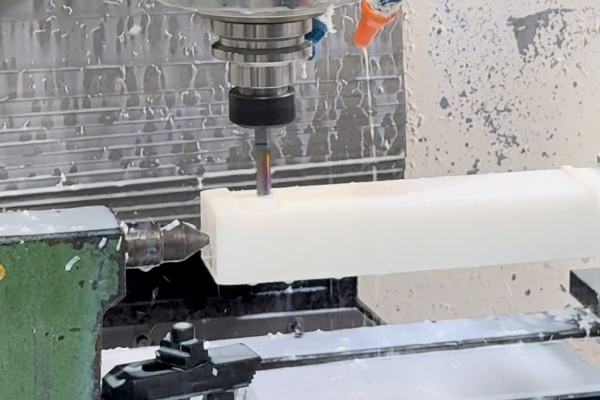
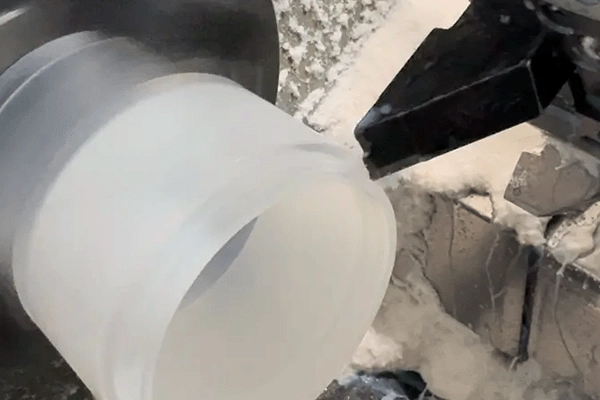
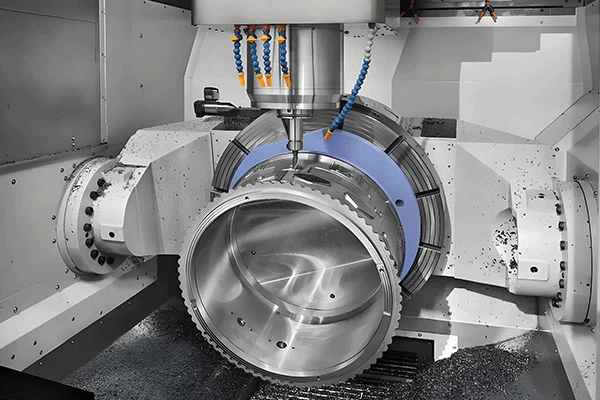
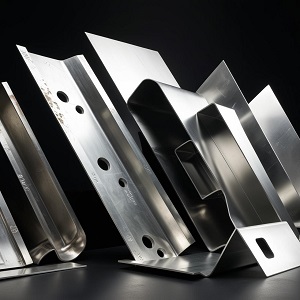
Confirming CNC machining before ordering
On the overall CNC pages, the general machining accuracy described is 0.01 mm. That figure is a general statement for CNC work as a whole, not a promise for every feature on every drawing. Before ordering, confirm minimum order quantity and lead time for your drawings.
Drawing checklist
Send the drawing with units and scale stated, the material and grade, the critical dimensions and tolerances marked, and the finish required. State the quantity you need checked and the question the part must answer: fit, function or appearance. Emailed files are used only for the quotation, and non-disclosure agreements are supported.
Quality checks
Parts are inspected with a coordinate measuring machine, a projector and height gauges, with quality control at each production stage, and a dimension report can be provided for a project on request.
Nine service lines from one supplier
CNC Machining
Three, four and five axis milling, turning, grinding and electrical discharge machining for metal and plastic parts, from a single prototype toward continuing production.
Injection Moulding
Thermoplastic moulding, liquid silicone rubber moulding and metal injection moulding, with mould design review, trial moulding and production from the same route.
Sheet Metal Fabrication
Laser, water and plasma cutting with stamping, bending, spinning, welding and finishing, aimed at prototypes and limited runs of brackets, housings, frames and panels.
Metal Forming
Forging, casting, metal injection moulding and powder metallurgy, together with stamping, extrusion, rolling and spinning as forming families for shapes that suit shaping better than cutting.
3D Printing
Plastic, resin and metal additive parts for complex shapes and custom parts without tooling, where the geometry, not the run size, decides the route.
Vacuum Casting
Silicone moulds and polyurethane casting for a limited run of plastic parts that look and feel close to moulded parts, without committing to a production mould.
Surface Finishing
Mechanical, coating and metal treatments for machined, sheet metal and prototype parts, including anodising, plating, blasting, powder coating and physical vapour deposition.
Custom Extrusion
Custom aluminium extrusion as the main line, with metal and plastic profiles of irregular section, secondary machining and surface treatment for profiles that must fit an assembly.
Welding Services
Friction stir welding and vacuum brazing for high-accuracy joints in aluminium, copper and magnesium alloys, where a clean, strong joint matters more than a fast one.
Machining processes at a glance
Most inquiries on this site start with a machining question, not a service-line name. Milling cuts prismatic shapes and pockets; turning cuts round parts; five-axis work cuts complex geometry in one setup; grinding refines hard materials and fine surfaces; electrical discharge machining cuts hardened material and shapes a cutter cannot reach; wire cutting follows a complex profile through conductive material.
A buyer who names the feature that matters most — a pocket, a bore, a thread, a thin wall, a sharp internal corner — will get a faster and more useful review than a buyer who only names a process. The review step exists to match the feature to the process before any machine is booked, and to say plainly when a different route, such as printing or casting, fits the part better.
Inspection runs through every process on this site. Parts are checked with a coordinate measuring machine, a projector and height gauges, with quality control at each production stage, and a dimension report can be provided for a project on request.
That inspection habit is what makes the difference between a part that looks right and a part whose critical dimensions are reported. When a drawing arrives, the dimensions that will be reported should be marked on the drawing itself, so the inspection plan and the machining plan are agreed at the same time.
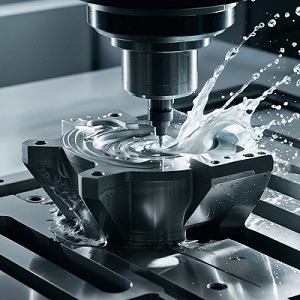
Materials we machine
The material list on this site is organised the way service descriptions organise it: metals first, then engineering plastics, then ceramics and composites as separate directions. Aluminium alloys such as 6061, 7075 and 5052 cover housings, brackets and structural parts; stainless grades such as 304, 316 and 17-4PH cover parts that must resist corrosion; titanium grades TC4 and TA2 cover strong, corrosion-resistant parts where cutting heat and tool wear must be controlled; copper alloys cover fittings and conductive parts.
Engineering plastics run to more than thirty options stated on JeekRapid, with ABS, polycarbonate, nylon, polypropylene, acetal and PEEK among the listed grades. Each material page on this site names only the grades its service description lists, and the grade that governs any real part is always the grade written on the drawing and confirmed at quotation.
Industries served
Five industry directions have their own pages on this site, because each one pairs materials with processes in a different way. Aerospace work pairs aluminium, titanium, steel, nickel alloys, composites, ceramics and nylon with machining, laser cutting and printing for parts that must perform under extremes.
Automotive work pairs aluminium, plastics, steel, polyurethane foam and carbon fibre with machining, moulding, welding and hand lay-up for powertrain, body and interior parts. Medical work pairs stainless steel, titanium, PEEK, medical-grade silicone and ceramic with machining, moulding and grinding for instruments, implants and device components.
Industrial machinery work pairs aluminium, engineering plastics, steel, stainless steel and carbon fibre with machining, casting, moulding and welding for parts under high loads. Product development work pairs ABS, aluminium, silicone, resin and stainless steel with printing, moulding and machining for prototypes that must be tested before production.
From drawing to inspected parts
The route a buyer follows on this site is short. First, a drawing or CAD file is sent for review, with the material, the critical dimensions, the finish and the quantity stated on it.
Second, the drawing is analysed and the order is confirmed, with confidential handling throughout and non-disclosure agreements supported. Third, the part is made by the route that fits its geometry, material and quantity.
Fourth, the part is inspected with the measuring equipment listed above, and a dimension report can be provided for the project. A buyer who sends a complete drawing at the first step — units and scale stated, tolerances marked, finish required — removes the most common cause of delay, which is a second round of questions about information the drawing should already have carried.
JeekRapid at a glance
| Item | Confirm for your drawing |
|---|---|
| Company | Dongguan Jeek Precision Technology Co., Ltd., operating as JeekRapid |
| Founded | 2013, by Mr. Lin |
| Base | Chang'an, Dongguan, Guangdong, with a sales and engineering office in Shenzhen opened in 2024 |
| Workshop | About 3,200 square metres |
| Equipment | About 40 CNC machines |
| Confirm the material grade, process, critical tolerances and inspection requirements for your drawing before ordering. | ISO 13485 medical device quality management certification, valid until 2028-04-15 |
| Contact | Phone +86 150 1792 5131, email [email protected] |
Related pages: Medical device parts sourcing · CNC machining manufacturing · Blog
What buyers ask first
Can one supplier really cover machining, moulding, sheet metal, forming, printing, casting, finishing, extrusion and welding?
Yes, in the sense that matters for a buyer: one review, one quotation route and one inspection habit across nine service lines. That does not mean every line is equally deep for every part, and the service line pages say plainly where each line is strong and where it is a supporting route. A buyer whose part needs two lines should ask for the combination to be planned together, because a part planned line by line is often a part whose interfaces were never planned at all.
Should the first inquiry include the full drawing, or only a summary?
Include the full drawing. A summary produces a summary quotation, and a summary quotation must be revised when the drawing arrives. A full drawing with units, scale, datum, tolerances, finish and quantity produces a quotation that can be confirmed, and a confirmed quotation is the only kind that should enter production. Confidential handling and non-disclosure agreements cover the drawing from the email drawings step onward.
How does a buyer know whether the quoted route is the right one?
By asking for the reason, not just the route. A route recommended because the feature needs it, the material suits it and the quantity justifies it can be checked; a route recommended without a reason cannot. The guides on this site give buyers the vocabulary for that question — accuracy, material, surface, geometry, quantity — so the recommendation can be tested rather than merely accepted.
Finding the right page from the part in hand
| If the part is | Start here |
|---|---|
| A metal part with tight dimensions | CNC machining, then the process page for its features |
| A plastic part in quantity | Injection moulding, with the design review first |
| A flat metal shape with bends | Sheet metal fabrication |
| A complex shape in a small run | 3D printing or vacuum casting |
| A profile of constant section | Custom extrusion |
| A joint between light alloys | Welding services |
Every page on this site links onward to related pages, and the services page lists all nine service lines with their sub-process pages. A buyer who starts in the wrong place will still reach the right page within two clicks, because the navigation is organised by process, material and industry rather than by internal product codes.
Why buyers stay with one supplier
Changing supplier between prototype and production costs more than most buyers expect, and the cost is rarely visible in a quotation. A new supplier must read the drawing again, learn the part's critical dimensions again, agree an inspection plan again, and build trust again — and each of those steps is a chance for a misunderstanding that a continuing supplier has already resolved.
Staying with one supplier from prototype through limited runs toward production keeps the drawing history, the material decisions, the process choices and the inspection records in one place, so each new order starts from the last order's knowledge rather than from zero. That continuity is the practical reason this site lists nine service lines together: not because one supplier must do everything, but because a buyer whose part needs two or three lines should not have to coordinate them across two or three companies, with the interfaces between lines falling into the gaps between suppliers.
Continuity does not mean exclusivity, and a buyer should still compare suppliers on the checks this site recommends — material list for the part, process per feature, inspection reported. A continuing supplier that passes those checks order after order has earned the next order; a continuing supplier that stops passing them should be replaced, whatever the history. The relationship this site describes is therefore a working one, not a loyal one: stay while the checks pass, and let the checks, not habit, decide when to stay and when to move.
Get a machining review
Send your part drawing for a machining review — tell us the material, tolerance and finish you need confirmed.
Phone: +86 150 1792 5131 · Email: [email protected] · Room 102, Building 2, No. 4 Rongfeng Street, Chang'an, Dongguan, Guangdong.